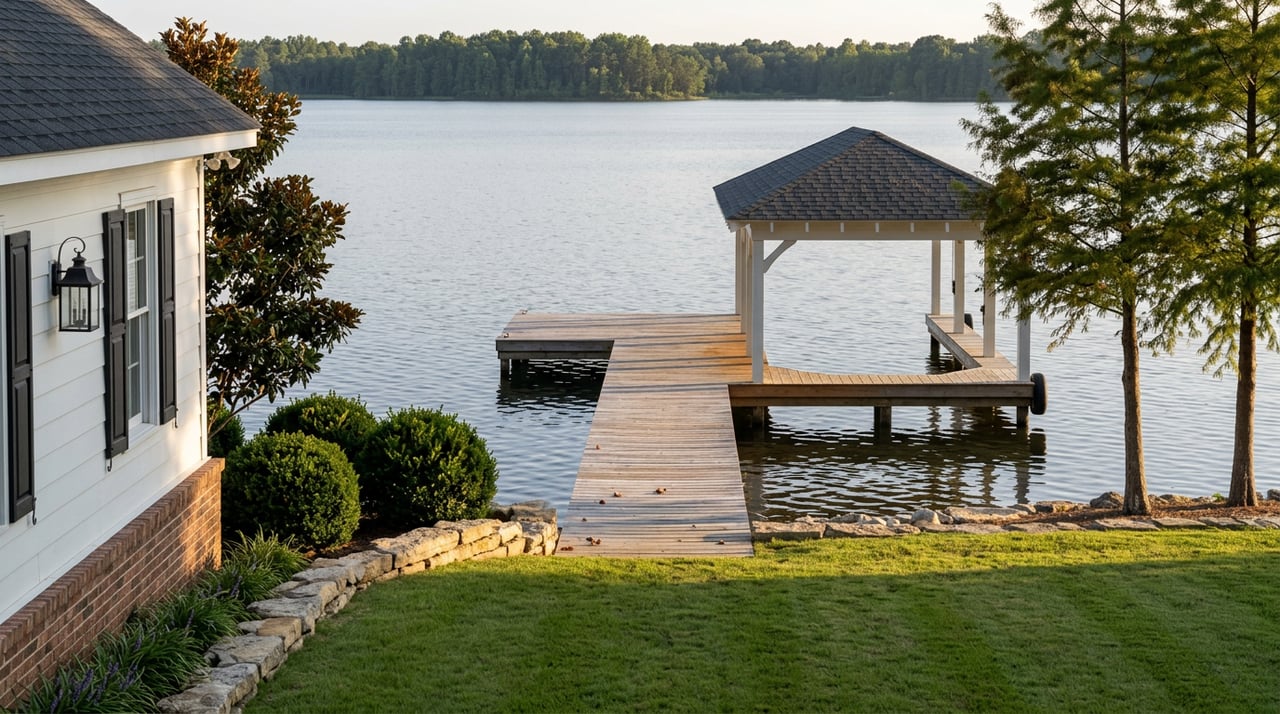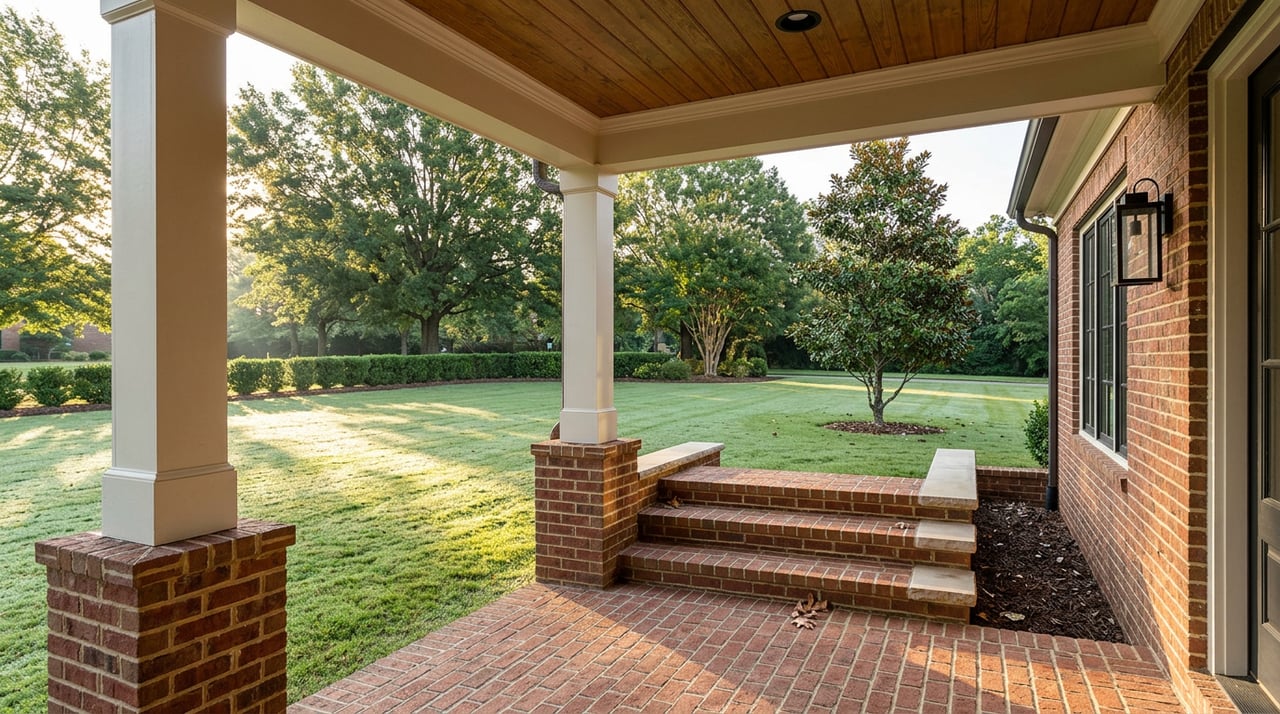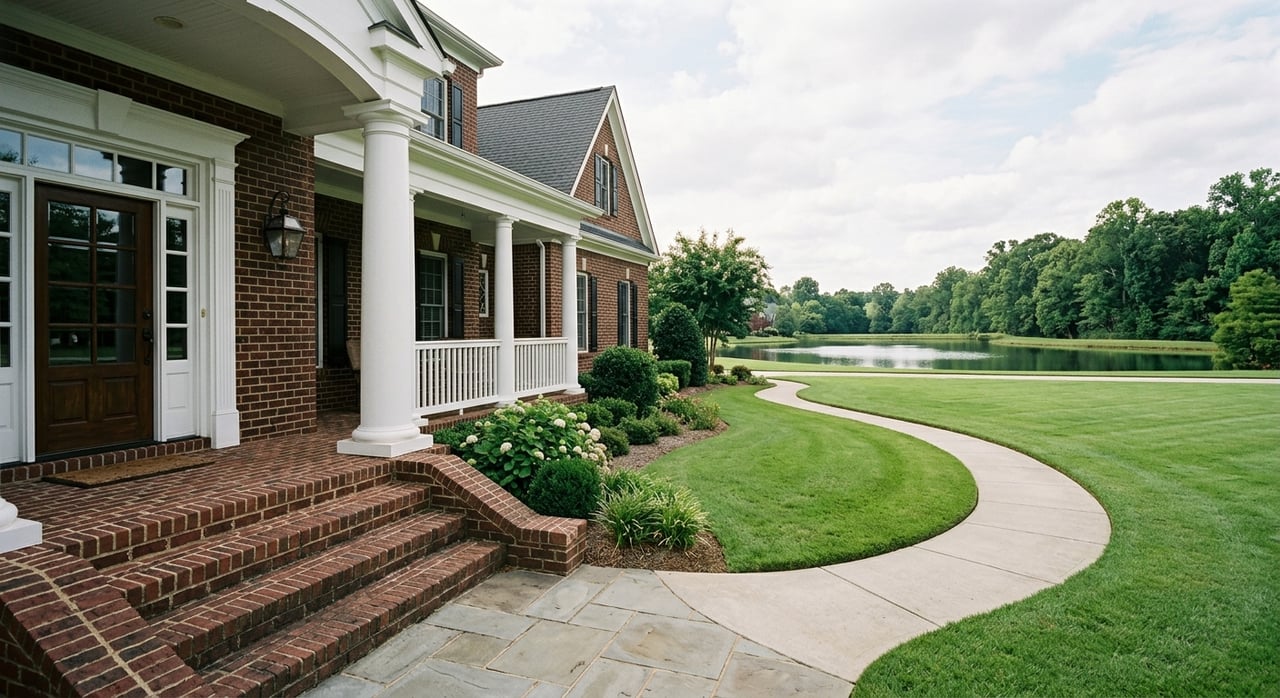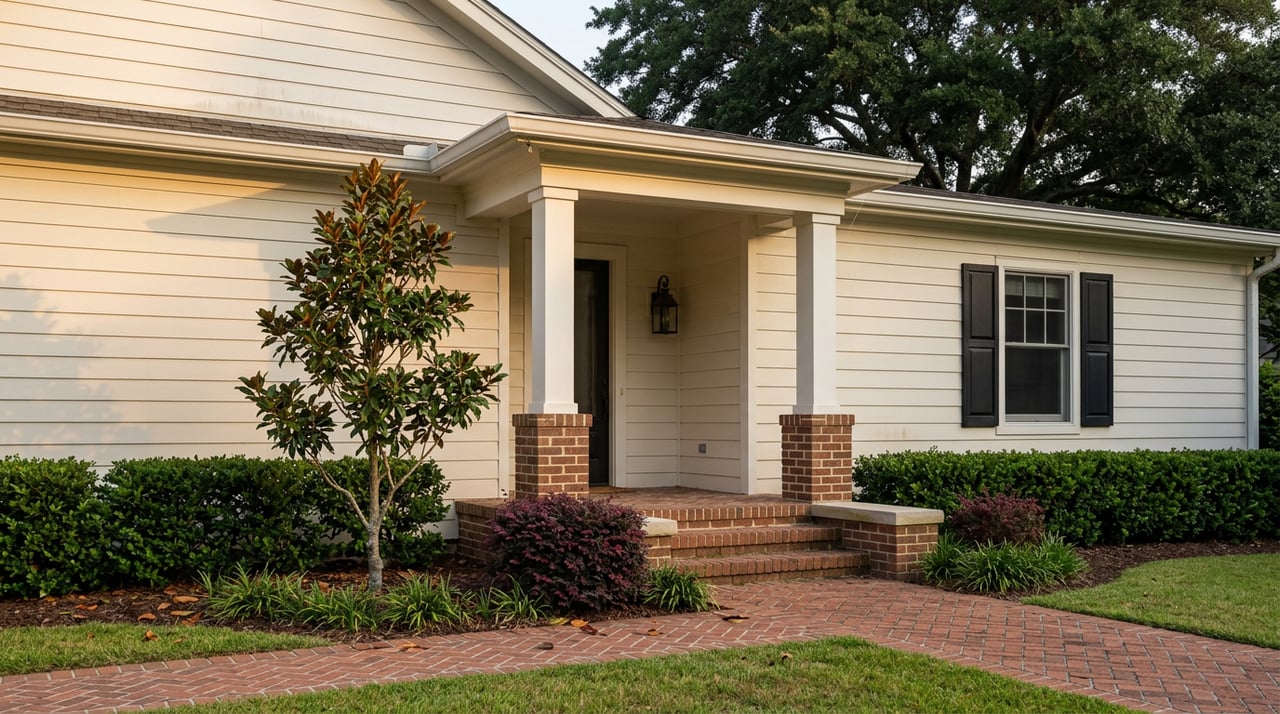
Two homes sit within a few hundred yards of each other on the Ross Barnett Reservoir. Both have private docks. Both are listed as waterfront. Both would show up on a portal search with nearly identical square footage and asking price. One of those homes sits on land the owner holds outright, the kind of real property you can pass down for generations without anyone else's signature. The other sits on a 60-year lease with a built-in rent increase every five years, issued by a government agency most buyers have never heard of until it shows up in the closing documents.
The listing photos look the same. The ownership does not.
That difference runs through Palisades on the Reservoir, the Brandon community of roughly 190 custom homes tucked along the Ross Barnett Reservoir off Fannin Landing Circle. Palisades markets itself, reasonably, as a lakeside lifestyle: a clubhouse and pool with water views, boat launches at both ends of the neighborhood, walking and biking paths threading past the shoreline. What the marketing rarely spells out is that the land under many of those water-adjacent lots isn't something you buy the way you'd buy a lot in a subdivision built around a developer's private lake. It's leased from the Pearl River Valley Water Supply District, and that lease has terms a buyer needs to understand before falling for the view.
The Reservoir Runs on a Different Set of Rules
The Ross Barnett Reservoir isn't a private amenity the way Lake Caroline or the private lakes inside Bridgewater are. Those developments engineered their own lakes and sold fee-simple lots around them, the same ownership structure as any other home in Madison or Ridgeland. The Reservoir is a public water supply project, created by the Mississippi Legislature in 1958 to secure drinking water for Jackson, and it's still governed today by the Pearl River Valley Water Supply District, a five-county agency covering Hinds, Leake, Madison, Rankin and Scott counties.
The District's authority extends to any land within a quarter mile of the shoreline. Once the construction bonds on the reservoir were paid off in 1992, the District stopped collecting taxes and started relying almost entirely on leasing fees to fund itself. That single fact is the reason a home directly on the water in Palisades can operate under an entirely different ownership model than a home three streets back, or a lakefront lot in a private Madison subdivision a few miles away.
The Lease, in Actual Numbers
According to the District's own property leasing page, the Pearl River Valley Water Supply District now manages close to 6,000 residential and commercial leases across roughly 17,000 acres of shoreline property, home to more than 15,000 residents. A standard residential lease runs 60 years, with lease payments escalating 10 percent every five years. A handful of older flat-rate leases still exist, but those convert to the escalating structure the next time the property changes hands.
Here is what that looks like next to a conventional fee-simple lot:
| Reservoir Leasehold Lot | Fee-Simple Lot (e.g., private lake subdivision) | |
|---|---|---|
| Land ownership | Leased from PRVWSD, up to 60-year term | Owned outright, no expiration |
| Payment structure | Annual lease fee, up 10% every 5 years | No comparable recurring land payment |
| Property taxes | Paid separately to the county; PRVWSD has no taxing authority | Paid to the county as usual |
| Transferability | Sellable, willable, or trustable, but PRVWSD must consent to the transfer | Sold or transferred without a third-party consent step |
| Shoreline construction | Building a pier or boathouse requires a separate permit | Governed by HOA covenants and standard permitting |
None of this makes a Palisades waterfront lot a bad purchase. It makes it a different one, and different in ways that don't show up in a standard listing sheet.
Where This Actually Bites: Financing and Disclosure
A 60-year lease sounds long until you're the tenth owner down the line and the remaining term has shrunk to something a lender wants explained. Lenders underwrite leasehold property differently than fee-simple property, and the remaining years on a Reservoir lease can affect how a loan gets structured or whether a particular product is available at all. That's a conversation worth having with a lender before writing an offer, not after an appraisal comes back with questions.
The transfer mechanics matter too. The District's own guidance confirms a leaseholder can sell the leasehold, leave it in a will, or move it into a trust in the same ways an owner would handle fee-simple property. But every one of those transfers requires the District's consent first. That's an extra step, and an extra piece of timeline risk, that doesn't exist on a conventional sale.
On the seller side, this becomes a disclosure conversation. A buyer comparing a Palisades listing against a comparable home on a private lake elsewhere in the Madison area is not comparing two versions of the same product. They're comparing a leasehold with an escalating payment schedule against a fee-simple parcel with none. Pricing a Palisades home without accounting for the lease's remaining term and next escalation date is a good way to get a surprised buyer at the inspection table, or a stalled deal at underwriting.
Even the New Construction Follows the Same Path
This isn't a legacy quirk left over from the 1960s. As recently as November 2025, a development group called Expedition Point LLC was working through the closing process with the District's board on a 100-acre parcel at Brown's Landing, near where the Natchez Trace crosses Highway 43, according to reporting in the Northside Sun. The plan calls for 180 lots, 135 of them waterfront or lake-view. Before a single foundation gets poured, the developer has to sign a lease with the PRVWSD board, the same structure that governs the older lots in Palisades today. Buying new construction on the Reservoir doesn't sidestep this system. It just means the lease clock starts fresh.
What This Means for Palisades Specifically
Palisades itself layers a neighborhood HOA on top of whatever lease structure applies to a given lot. Recent listings put the HOA at $1,060 a year, covering the pool, clubhouse and shared walking trails. That's a separate line item from any PRVWSD lease payment on a water-adjacent parcel, which means a buyer pricing out the true annual cost of a Palisades waterfront home needs to stack both figures, not just the one the listing agent leads with.
It's also worth saying plainly: not every lot in Palisades sits within the District's quarter-mile jurisdiction. Interior lots set back from the shoreline may be entirely conventional fee-simple property, while the lots that actually touch the water are the ones most likely to carry a lease. The only way to know which category a specific address falls into is to check the title work, not the marketing copy.
The Reservoir Rewards a Slower Read
None of this should scare a buyer off Palisades. A 60-year lease is a long horizon, and the District's own FAQ confirms a lessee can typically obtain a new 60-year term when the current one runs out, which means the leasehold structure isn't a countdown to losing the property. But it is a different asset than a fee-simple lakefront lot, and pricing, financing and negotiating it the same way you would a private-lake home is where deals get complicated later instead of clarified up front.
For buyers weighing Palisades against a fee-simple lakefront option in a Madison subdivision, the honest answer is that both can be good decisions. They're just not the same decision, and the reservoir's fine print is worth reading before the water view talks you out of asking.
A Few Questions Worth Asking Before You Write an Offer
Is every lot in Palisades on a PRVWSD lease? No. The District's jurisdiction covers land within a quarter mile of the shoreline, so interior lots may be fee-simple while water-adjacent lots typically fall under the lease structure. Confirm the specific lot's status through title work.
Does a Reservoir lease change how I get a mortgage? It can. Lenders look at the remaining lease term as part of underwriting, so a shorter remaining term is worth flagging with your lender early rather than discovering it at appraisal.
What happens when the lease runs out? Under current District guidance, a lessee may obtain a new 60-year lease, though any transfer of an existing lease, including a sale, still requires the District's consent.
If you're comparing a Palisades waterfront listing against a private lake option elsewhere in Madison or Ridgeland, that comparison deserves more than a side-by-side of square footage and asking price. It deserves someone who can walk the lease terms, the HOA structure and the financing implications with you before you're three weeks into a contract.
Cindy Johnston works these exact comparisons across Rankin, Madison and Hinds counties every week. Get Your Instant Home Valuation and start the conversation with someone who reads the fine print before you sign it.