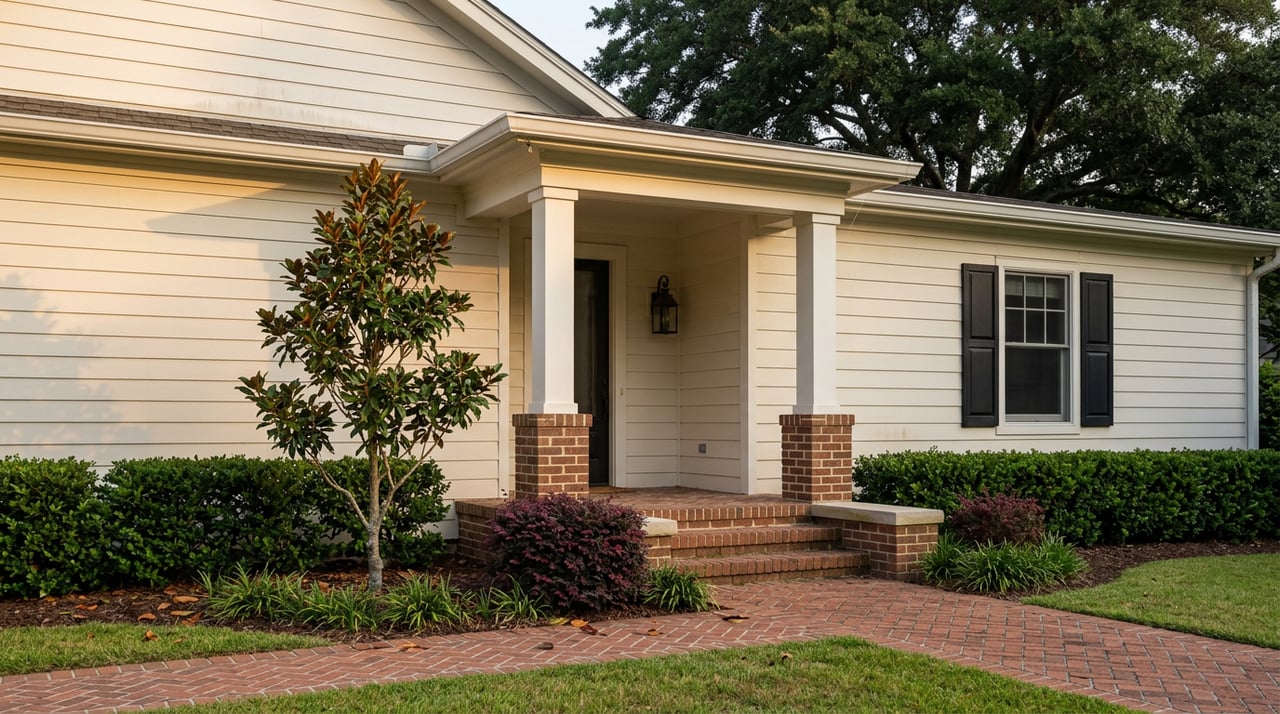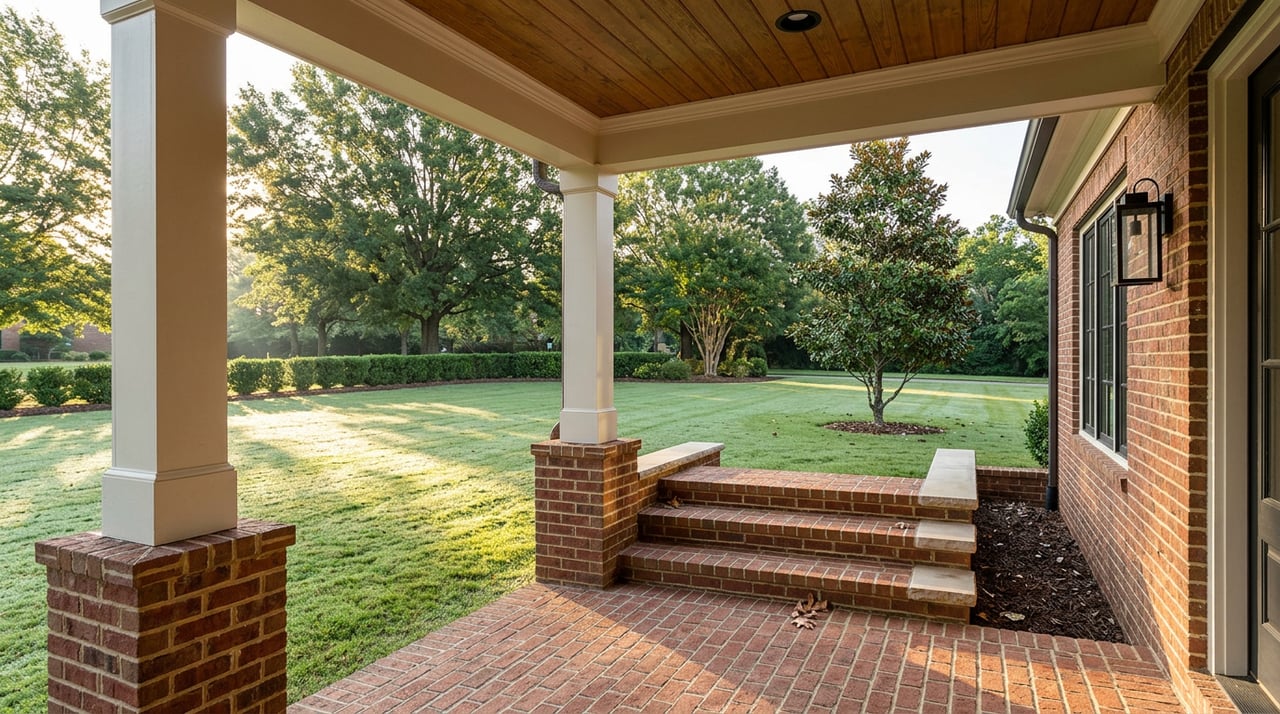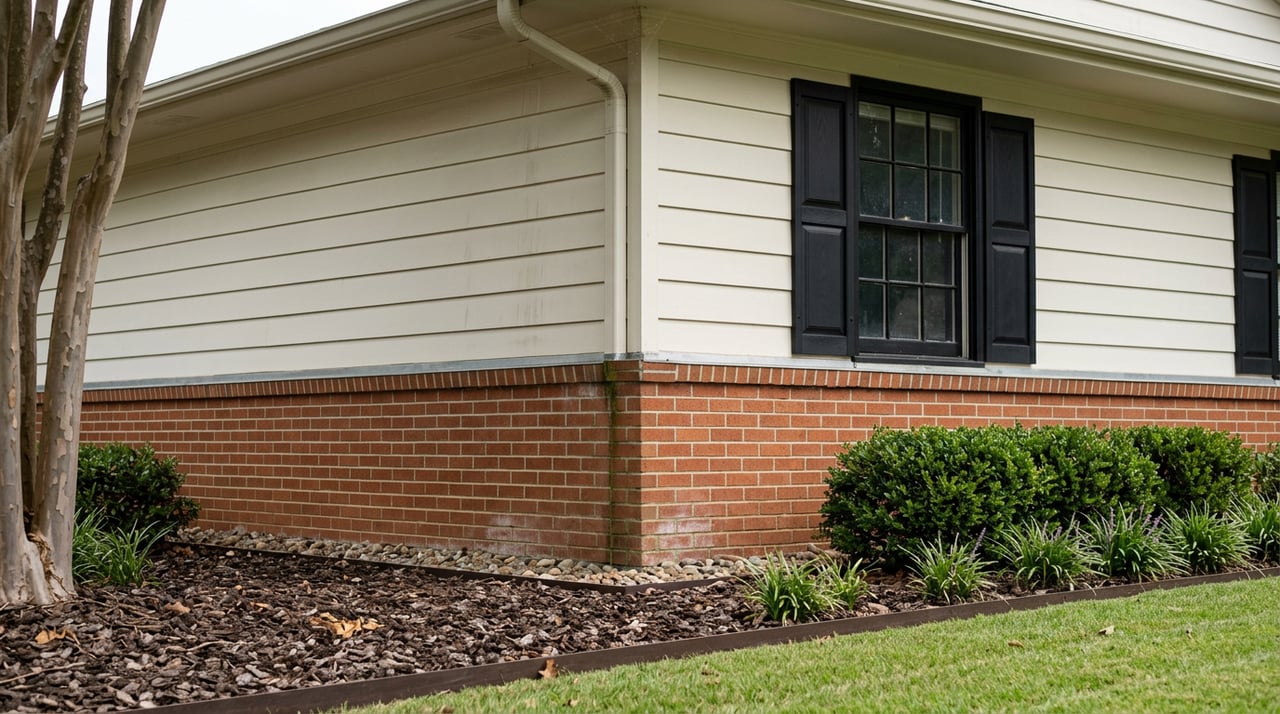
The two houses looked almost identical. Same builder, same year, same floor plan, ten minutes apart. One sat in Madison. The other sat just across the Hinds County line in Clinton, priced forty thousand dollars less. A buyer touring both assumed the gap was schools, or maybe just Madison's zip code premium. Then her agent pointed to a clause on page four of the new-construction contract: a waiver of the builder's liability for soil movement, because the home was built on land the buyer already owned.
That clause is legal in Mississippi. It is also the kind of detail that never shows up in a listing description, and it explains more about the Hinds County price gap than any school rating or commute time ever could.
Same Clay, Different Price Tag
Central Mississippi sits on a geological formation called Yazoo Clay, and it does not respect county lines. A mapping study by the U.S. Army Corps of Engineers, cited by structural engineering firm ABTS Consultants, shows the formation running beneath Jackson, Flowood, Madison, Ridgeland, and Clinton, tapering off somewhere between Richland and Byram. That means a meaningful share of Hinds County, including neighborhoods close to the Rankin County line, sits on the same expansive clay that Madison County homeowners deal with every time the weather swings from soaked to dry.
The clay itself is not subtle. Engineers at ABTS Consultants note that it can generate up to 25,000 pounds of swell pressure per square foot when wet, against a typical house that exerts somewhere between 200 and 375 pounds per square foot on its foundation. When the clay dries out again, it pulls away from whatever it was pushing against. That cycle, repeated over years of Mississippi rain and heat, is what produces the cracked slabs, sticking doors, and uneven floors that show up in older housing stock across the metro.
Industry estimates cited in a 2008 Federal Reserve Bank of Atlanta community development report put the share of damaged homes in the Jackson metro as high as 65 percent to some degree. That number is not new information for anyone who has lived in the area a while. What is less commonly discussed is that Mississippi does not require builders to perform soil boring tests before construction. A house can be framed, slabbed, and sold without anyone ever confirming how deep the clay sits beneath it.
Here is where the price gap starts to make sense. Over the three months ending May 2026, homes in Hinds County sold at a median of $224,000, a market that has moved quickly, with an average of 24 days on the market. Mississippi's statewide median sale price over roughly the same window sat closer to $253,000. That is not a random discount. Hinds County's housing stock skews older on average than the newer subdivisions filling in around Madison and Rankin, and older homes on Yazoo Clay have had more years for the clay to do its work, whether or not that work is visible yet.
| Hinds County | Mississippi statewide | |
|---|---|---|
| Median sale price | $224,000 (3 months ending May 2026) | roughly $253,000 (as of September 2025) |
| Typical days on market | 24 days | 51 days |
A lower median price on an older home is not automatically a red flag. It is a signal to ask a different set of questions than the ones most buyers default to.
What the Disclosure Form Actually Promises You
Mississippi law requires sellers of residential property to deliver a Property Condition Disclosure Statement before a buyer signs a binding offer, under the state's disclosure statute. The current version of that form, maintained by the Mississippi Real Estate Commission, asks directly whether the seller is aware of structural issues, roof defects, or problems with flooring and walls.
The form is honest about its own limits. It states plainly that it reflects the seller's actual knowledge on the date it was signed, and that it is not a substitute for an independent inspection. A seller who has lived in a house for three years and never noticed a hairline crack under the baseboard has nothing to disclose, even if a soil boring would tell a different story. The form protects buyers from sellers who lie. It does not protect buyers from sellers who simply do not know.
That gap matters more in Hinds County than in a newer subdivision, precisely because more of the housing stock has had time to develop the kind of slow, seasonal movement that a homeowner might mistake for normal settling rather than a symptom worth disclosing.
The Six-Year Clock, and What It Skips
New construction comes with its own built-in protection, the Mississippi New Home Warranty Act. Every builder automatically warrants that a new home will be free of major structural defects for six years following completion, under Mississippi Code Section 83-58-5. That sounds like solid coverage against exactly the kind of foundation movement Yazoo Clay causes.
Read the exclusions, though, and the picture changes. The same statute allows a builder to waive liability for soil-related damage entirely, as long as the home is built on land the buyer already owned and the buyer signs a written waiver at the time. That waiver shows up most often when a buyer purchases a lot separately and then hires a builder to construct on it, a common pattern for custom and semi-custom homes in parts of Hinds County where land comes up for sale on its own. The six-year warranty still applies to plenty of construction defects. Soil movement, the single most common structural issue in this part of the state, can be signed away in that scenario before the slab is even poured.
The warranty also excludes driveways, patios, retaining walls, and landscaping outright, and it stops covering a basement or garage floor slab after the first year if that slab was built separate from the home's main foundation. None of that is a flaw in the law. It is simply a narrower promise than the six-year headline suggests, and it is worth reading before signing rather than after a crack appears.
Reading a Crack Correctly
A structural crack in a slab home is not automatically bad news, and a spotless-looking floor is not automatically good news. A few things worth doing before writing an offer on an older Hinds County home:
- Ask whether a soil boring or geotechnical report exists for the property, and if not, whether the seller will allow one before closing.
- Get the home inspector's take on whether cracking follows a pattern consistent with normal seasonal movement or something more active.
- Ask how long the current owner has lived there. A home that has been stable through several wet and dry cycles under the same owner tells you more than one that just changed hands.
- If the home was new construction on buyer-supplied land, ask directly whether a soil-movement waiver was signed at the time of the build. That document should exist in the closing file.
None of this requires a specialist's vocabulary. It requires asking the question before the inspection period closes, not after.
What This Means If You're Buying in Hinds County
The lower median price in Hinds County is not a discount on a lesser county. It is closer to a risk-adjusted price on an older housing stock sitting on the same clay that Madison and Rankin buyers pay a premium to build on new. That distinction matters because it changes the negotiation. A buyer who understands why the price is lower can ask for a soil report, negotiate around a documented repair, or simply buy with open eyes and a maintenance plan. A buyer who assumes the price reflects nothing more than location walks in blind to a conversation the seller may not even know needs to happen.
Cindy Johnston has spent a decade inside Madison, Rankin, and Hinds County transactions, and the foundation conversation comes up in almost every one that involves a home built before the last decade. If you are weighing a Hinds County property against something newer in Madison, or trying to figure out what a crack in a listing photo actually means for your offer, a conversation before you write that offer is worth more than any number on a listing page. Reach out to Cindy Johnston to talk through what a specific property's price is actually telling you.
A Few Questions Worth Asking Directly
Does a foundation repair that's already been fixed still need to be disclosed? Yes. Mississippi's disclosure guidance treats past repairs as part of the property's known history, not something that disappears once the work is done. A seller who had a slab releveled in 2022 should note it on the disclosure form even if the floor reads level today.
Is Yazoo Clay only a problem in the city of Jackson? No. Mapping cited by ABTS Consultants shows the formation extending well beyond Jackson's city limits, into Madison, Ridgeland, Flowood, and Clinton, with the edge falling somewhere between Richland and Byram. Distance from downtown Jackson tells you very little about whether a specific lot sits on the clay.
Can I request a soil boring before I make an offer? You can ask. Sellers are not required to provide one, and Mississippi does not mandate boring tests for existing homes changing hands. Making the request part of your inspection contingency is the more reliable route, since it gives you a documented answer before you are locked into closing.